PART I / CHAPTER 1 / A FEW OF OUR BEST
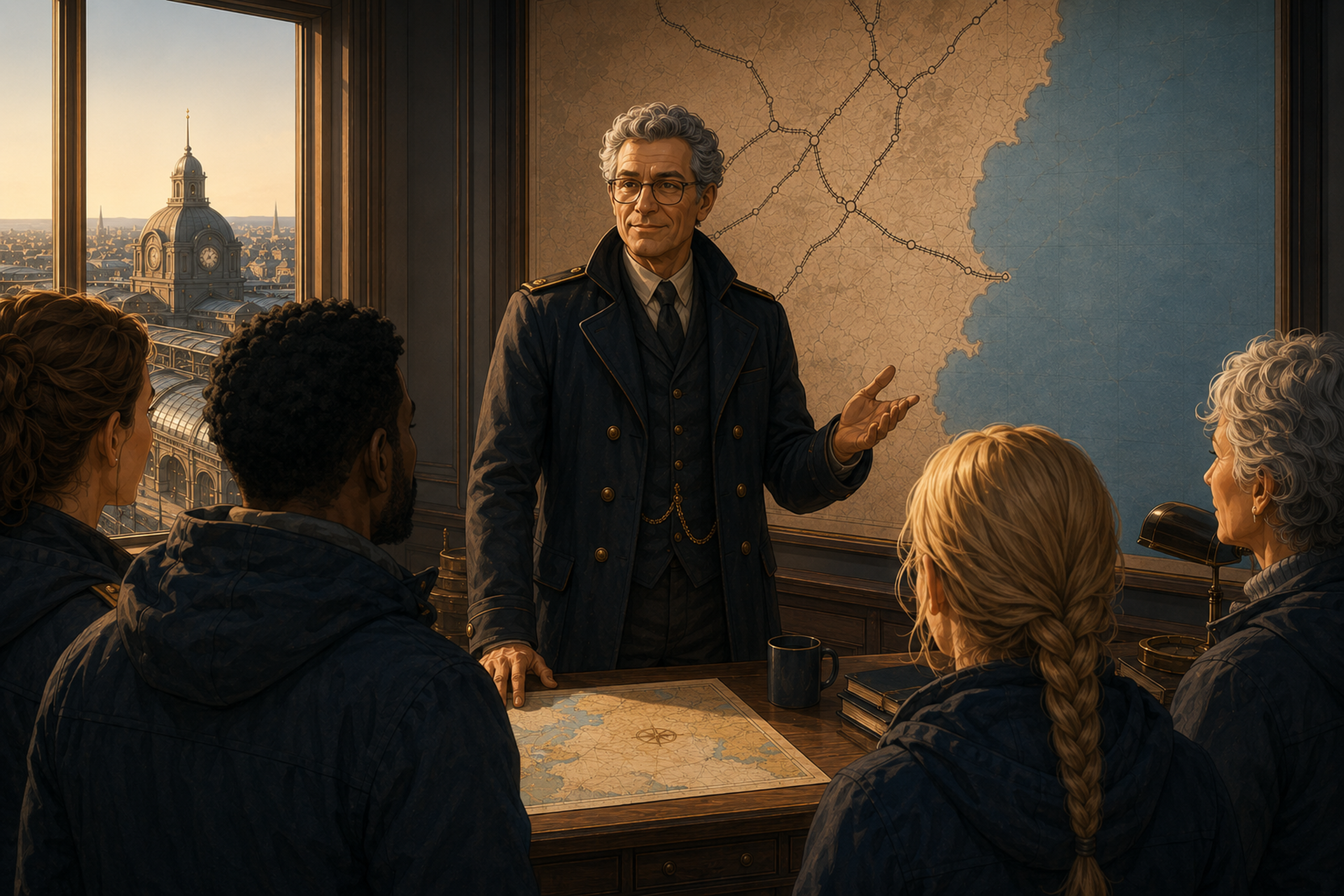
It was 08:14. The Railmaster was still beside the old map.
“What exactly are you proposing?”
The Captain looked at the others.
Nobody answered.
The Railmaster had spent most of his career removing ambiguity from a system where ambiguity could stop trains. The Scout tried first.
“We think there may be opportunities beyond the Railway.”
“There may be life on other planets.”
The Scout stopped. The Engineer almost smiled. The Captain tried again.
“We are not proposing an opportunity.”
“What are you proposing?”
“That we find out whether there is one.”
“One what?”
“A future worth exploring.”
“For the Railway?”
“Yes.”
“What kind?”
“We don’t know.”
“That is not usually considered a strength in a proposal.”
“No.”
The Railmaster returned to his desk. Beyond the glass, Central Station remained bright and clear. People moved along platforms. Doors closed. Signals changed. Another train departed.
“Let me understand this. The Railway works.”
“Yes.”
“We have more improvements to make.”
“Always.”
“You want people who could make those improvements to spend time looking for something you cannot describe.”
“Some of their time.”
“That distinction is doing a lot of work.”
“It should.”
The Observer spoke.
“We’re not suggesting the Railway stops anything.”
“Then what changes?”
“Very little.”
That interested him.
“The Railway keeps running. We keep improving it. Nobody abandons their job. Nobody announces a new strategy. Nobody commits capital to something we haven’t found.”
The Engineer added:
“We don’t build anything.”
The Scout looked at him.
“Yet.”
The Engineer continued.
“No destination chosen before we leave. No resources the Railway needs elsewhere.”
“And the point?”
“Find out,” said the Captain.
The phrase hung there. Small enough to sound almost trivial. Large enough to contain everything they did not know.
“How?”
The Captain looked at the others.
“Small,” said the Engineer.
She turned towards him.
“How small?”
“Small enough that being wrong doesn’t put anything important at risk.”
The Captain nodded.
“If we find nothing, the Railway still has a better Railway.”
“If you find something?”
“Then we decide what that means when we know what it is.”
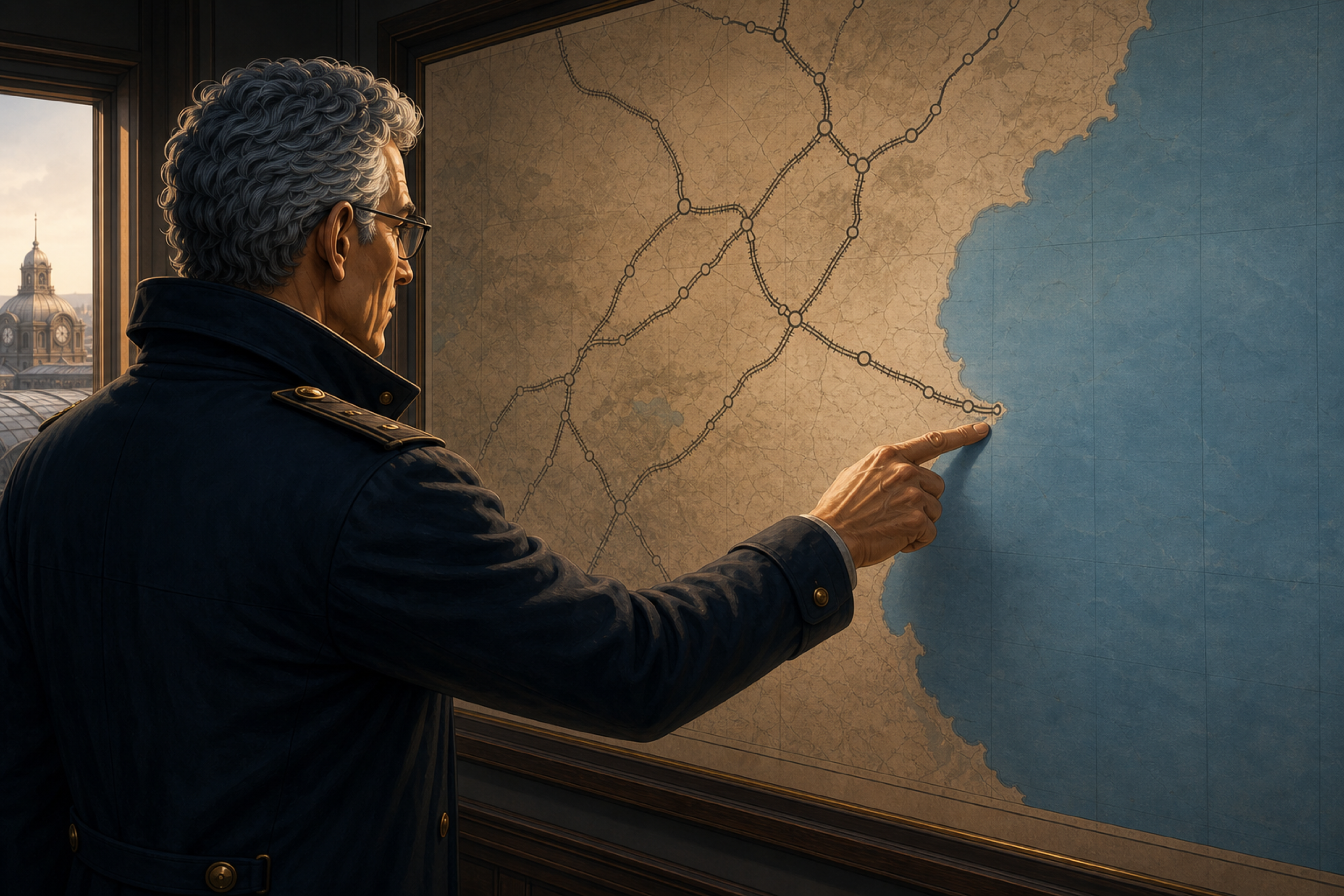
That was the smallest useful commitment. Learn first. Decide from what was learned. The Railmaster looked towards the old map.
“The first builders explored because they had no Railway.”
“Exactly,” said the Navigator.
“We do.”
The original explorers had needed to create capability while they explored. These five would leave with generations of capability behind them. Engineering knowledge. Operating experience. Relationships. Systems. People. Judgement. Technology. The accumulated learning of everyone who had turned problems into solutions and solutions into Railway. The Captain looked at the modern network.
“We don’t have to stop being Railway people to ask what else Railway people might be capable of.”
“How long?”
“A defined period. Then we return with what we know.”
“And if you need someone who isn’t among the five?”
“We call on exactly who we need.”
“For what?”
“Exactly what we need them for. For exactly as long as we need them. No more.”
The Railmaster nodded. That sounded more familiar.
“One question worth answering,” said the Captain. “A small team. Some of their time. A defined period. No commitment beyond finding out.”
“How many?”
“Five.”
“You already have five.”
He looked at them in turn. Captain. Engineer. Observer. Navigator. Scout. The Scout nodded before he was asked.
“Definitely.”
For the first time, the proposal had edges. Five people. Not permanently. Not full-time. No new organisation. No predetermined answer. A bounded search. The Railway would lend them proper working time, not whatever exhausted hours remained after everything important had been done. If the Expedition mattered enough to attempt, it mattered enough not to become a hobby.
The Railmaster began setting conditions.
“If the Railway needs one of you, the Railway gets you.”
“Agreed.”
“The trains keep improving.”
“Yes.”
“You do not return with a strategy you decided before leaving.”
“No.”
“You do not decide that one hundred interesting ideas means success.”
The Scout looked disappointed.
“No.”
“You do not start building something because you become excited halfway through.”
The Scout looked even more disappointed. The Engineer answered.
“No.”
“And if you find nothing?”
“We say we found nothing worth pursuing.”
“No project invented to justify the Expedition?”
“No.”
“And if you find something?”
“We bring it back.”
“To whom?”
The Captain looked through the glass. In the clear morning below, the Railway continued exactly as it should.
“To the Railway.”
The Railmaster followed her eyes. The question had become surprisingly small.
He was not being asked to choose a new future. Only to let five people find out whether one existed.
Not:
Should the Railway transform?
Not:
What should replace it?
Not even:
What should it build next?
The Captain put it plainly.
“Lend five people. Some of their time. Keep the Railway running. Keep making it better. And find out.”
The Railmaster was silent.
Then stood.
The Scout checked the clock.
08:21.
“That’s a yes?”
“It is permission to prepare.”
The Scout almost objected. The Captain stopped him.
The Railmaster walked back to the old map.
“You want to make a journey without knowing the destination.”
“Yes.”
“That sounds like an Expedition.”
The word fitted.
“Then before you leave, work out what you’re sailing for.”
“Not where?”
“No.”
He glanced towards the Railway.
“Who you’re going for. What you’re trying to find out. What would make anything you bring back worth bringing home.”
He returned to his morning Railway.
“Then you can sail.”